How AI Can Personalize the Patient Experience in Healthcare

Patients don’t compare your practice to the clinic down the street—they compare you to every “frictionless” experience they’ve had elsewhere. In healthcare, that expectation shows up as a simple question: Do you know me, and will you help me quickly? AI can help you answer “yes” at scale by personalizing communication, reducing wait times, and guiding patients through next steps without adding workload to your team.
This article breaks down practical ways AI in healthcare can create a more personalized patient experience and improve patient engagement—especially for practice owners and office managers who are balancing call volume, staffing shortages, and rising patient expectations.
What “personalized patient experience” really means (and why it’s hard)
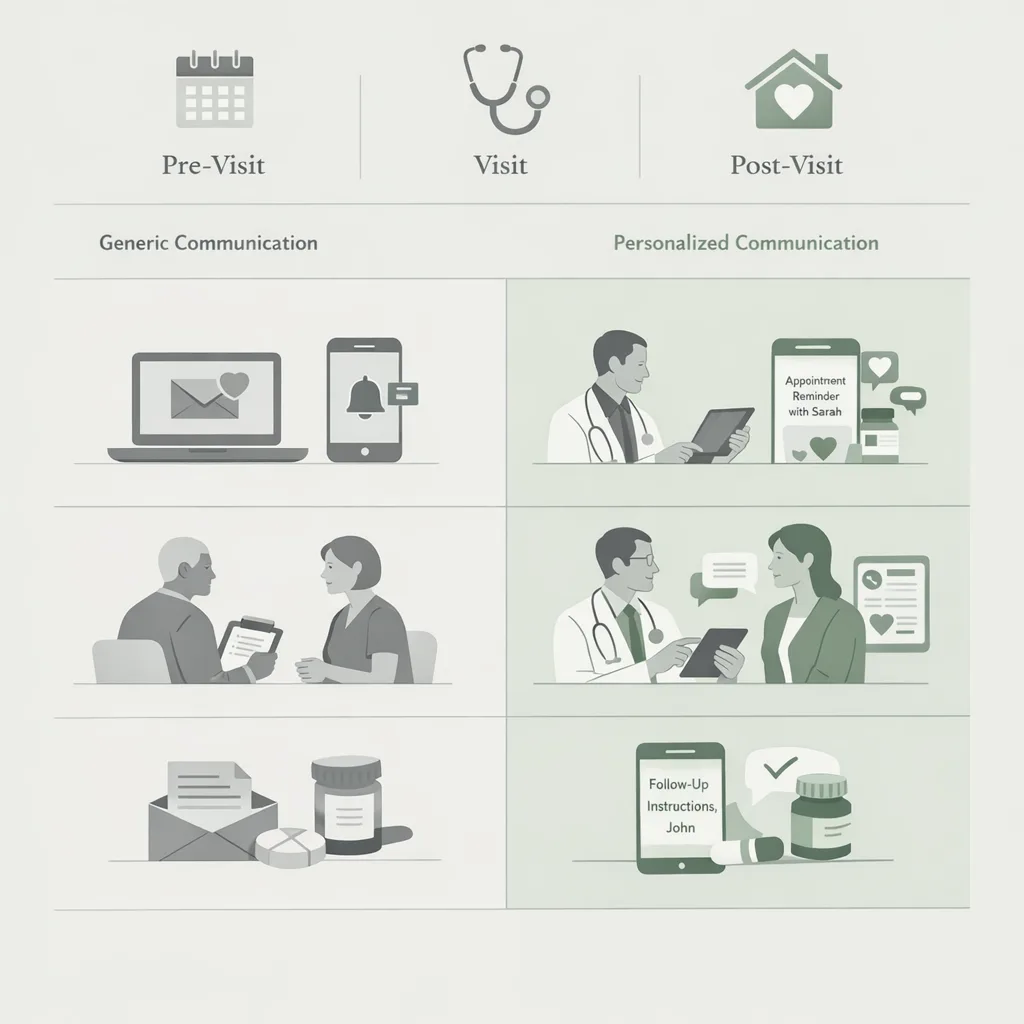
Personalization in healthcare isn’t just using a patient’s first name in a text. It’s delivering the right support, at the right time, through the patient’s preferred channel—while respecting privacy and clinical boundaries.
In day-to-day operations, personalization usually comes down to:
- Access: Can a patient reach you quickly by phone, text, or web?
- Relevance: Are reminders, instructions, and follow-ups tailored to the visit type and patient history?
- Continuity: Does the patient feel “known” across calls, visits, and billing?
- Clarity: Are next steps obvious (forms, insurance, prep instructions, rescheduling)?
The challenge: personalization requires consistent data, consistent workflows, and consistent staff time—three things most practices don’t have in abundance.
How AI personalizes care without adding staff burden
AI-driven systems can act like a “memory + routing layer” for your front office—capturing intent, recognizing returning patients, and triggering the right workflow automatically.
1) Personalization at the first touchpoint (calls, texts, web)
The first interaction often determines whether a patient books, shows up, or churns.
With an AI receptionist, personalization can include:
- Recognizing returning patients and referencing prior context (e.g., “Are you calling to reschedule your follow-up?”)
- Routing based on intent (new patient, refill request, billing question, urgent symptoms)
- Offering the right scheduling options based on clinic rules (provider, location, appointment type)
- Capturing structured details so staff doesn’t have to re-ask the same questions
FrontDesk’s AI receptionist is designed to reduce friction at this moment, especially when paired with streamlined workflows like New Patient Intake.
2) Personalization through proactive outreach (not just reminders)
Most practices do reminders. Fewer practices do relevant outreach.
AI-powered outreach can personalize messages based on:
- Visit type (annual physical vs. urgent visit vs. therapy session)
- Patient preference (call vs. text, language, time of day)
- Risk of no-show (prior history, time since last appointment, long wait times)
- Next-best action (complete forms, confirm insurance, arrive early, bring documents)
If you want to operationalize this, build a repeatable outreach cadence using Patient Outreach to:
- Confirm appointments with easy “confirm/reschedule” options
- Send tailored pre-visit instructions
- Follow up on missed appointments with a fast rebooking path
- Re-engage patients due for care (physicals, chronic care check-ins, therapy follow-ups)
3) Personalization with a unified patient record (CRM for the front desk)
Personalization breaks when information is scattered across sticky notes, inboxes, and EHR screens.
A front-office focused CRM helps your team:
- See conversation history and outcomes (who called, what they needed, what happened)
- Track follow-ups (forms sent, voicemail left, referral requested)
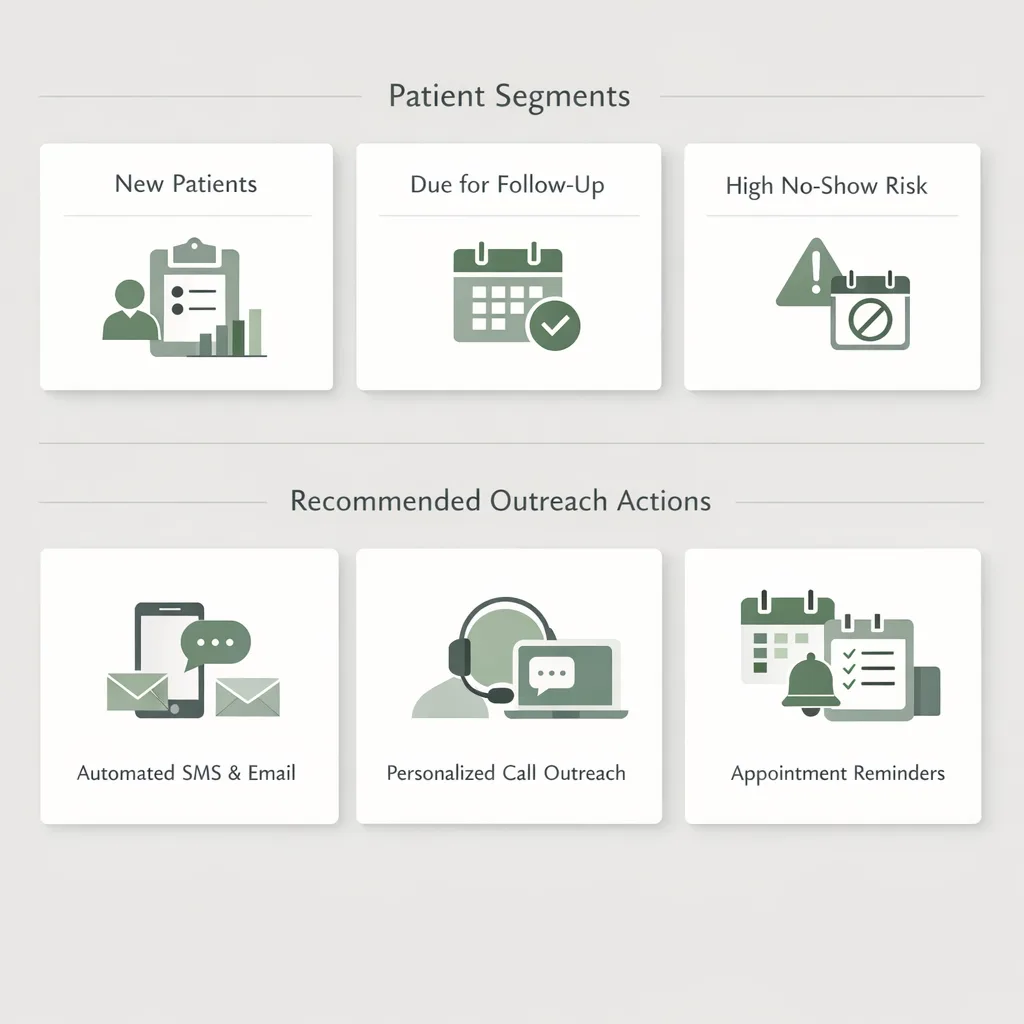
- Segment patients (new vs. returning, high-risk no-show, overdue)
- Standardize handoffs between staff members
That’s where a dedicated Patient CRM becomes the foundation for consistent, personalized service—without relying on one “superstar” staff member who remembers everything.
Where AI personalization makes the biggest impact (by specialty)
Personalization looks different depending on specialty and visit frequency. Here are high-impact examples.
Primary care: continuity, preventive care, and call volume relief
Primary care teams juggle high call volume, routine scheduling, and ongoing patient needs.
AI can help by:
- Handling common scheduling requests after hours
- Routing calls to reduce hold times
- Triggering preventive care reminders based on timing (annual wellness, labs)
See how practices address call overload in Primary Care Solutions and the outcomes in the FamilyFirst Primary Care Call Volume case study.
Urgent care: speed, triage, and clear next steps
Urgent care personalization is less about long-term history and more about fast, accurate routing.
AI can:
- Identify intent quickly (injury, illness, test, billing)
- Provide clinic info instantly (hours, location, what to bring)
- Reduce front-desk interruptions so staff can focus on in-person patients
Operational ideas and workflows are outlined in Urgent Care Solutions.
Mental health: trust, intake completion, and no-show prevention
Mental health personalization needs to feel human, respectful, and low-friction—especially during intake.
AI can support:
- Gentle, structured intake that reduces back-and-forth
- Faster scheduling for high-intent callers
- Better follow-ups for incomplete paperwork
- No-show reduction through empathetic reminders and easy rescheduling
Explore tailored workflows in Mental Health Solutions, plus practical tactics in Mental Health Intake Calls and Mental Health No-Shows. For a real-world example of improving intake, see the Clarity Mental Health Intake case study.
The personalization flywheel: data → action → trust
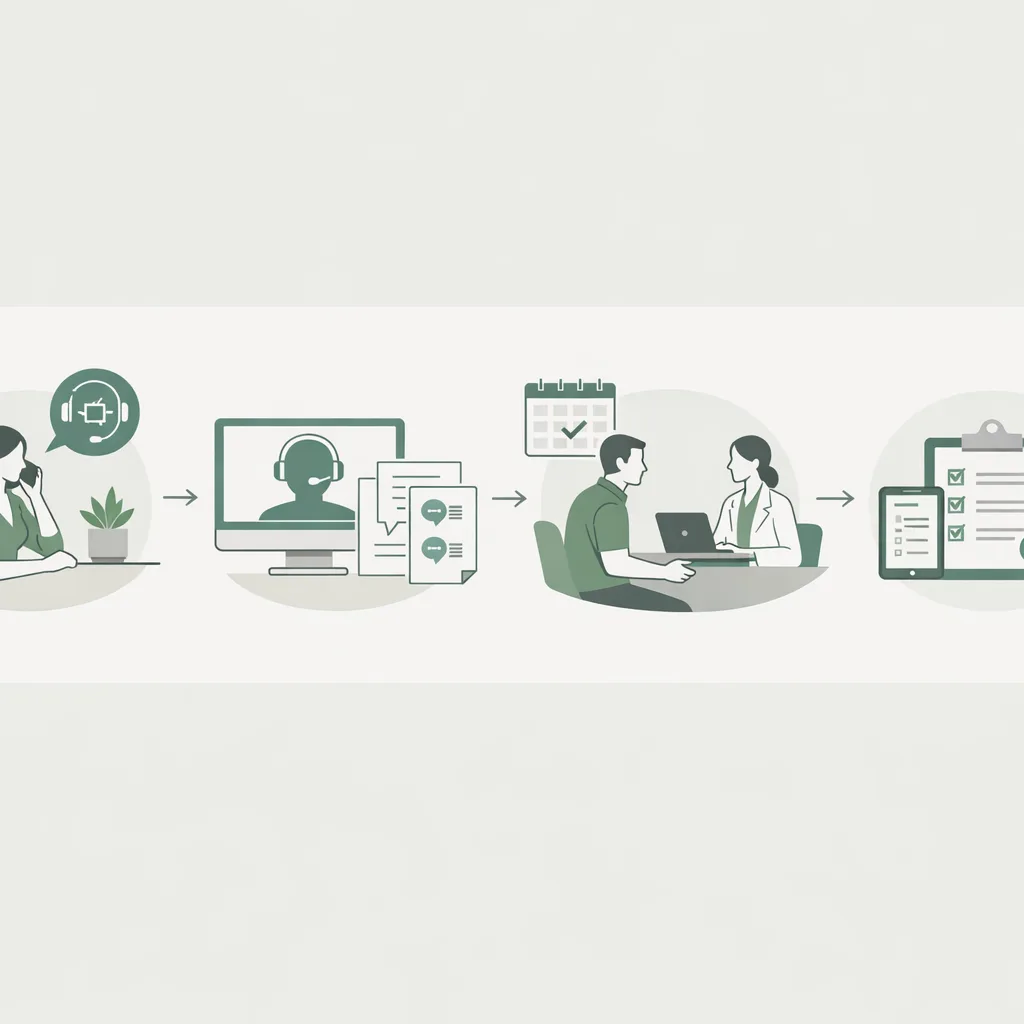
Personalization isn’t a one-time setup—it’s a loop. The practices that win build a flywheel where every interaction improves the next one.
Step 1: Capture the right data (without making it feel like an interrogation)
Use AI to collect only what’s needed to move the patient forward:
- Reason for visit
- Preferred appointment times
- Insurance basics (if appropriate)
- Contact preference (text/call)
- Urgency signals (for proper routing)
Step 2: Turn data into immediate action
The best personalization is useful personalization. Examples:
- If the patient is new → send intake forms + directions + what to bring
- If the patient has a history of rescheduling → offer flexible slots + easy reschedule links
- If the visit requires prep → send tailored instructions and reminders
Step 3: Close the loop with follow-through
Patients remember whether you did what you said you would do.
Operationalize follow-through with:
- Automatic confirmation messages
- Post-visit outreach (next appointment, satisfaction check)
- Rebooking workflows after missed visits
A simple way to measure whether personalization is landing: run a standardized feedback loop using the Patient Satisfaction Survey.
Practical personalization playbooks you can implement this month
Below are actionable workflows office managers can deploy quickly.
Playbook A: Personalized new patient intake that reduces drop-off
New patient conversion often fails at the “friction points”: long holds, unclear next steps, and forms that never get completed.
Action steps:
- Use AI to answer and qualify new patient calls 24/7
- Collect structured intake details (visit reason, scheduling constraints)
- Immediately send next steps (forms, insurance requests, directions)
- Follow up automatically if forms aren’t completed
For scripting and operational tips, use New Patient Calls That Convert alongside your New Patient Intake workflow.
Playbook B: Personalized no-show reduction (without annoying patients)
No-shows are rarely about “forgetting.” They’re often about anxiety, logistics, or unclear policies.
Use AI-driven outreach to:
- Confirm earlier (not just 24 hours before)
- Offer one-tap rescheduling instead of “call us back”
- Tailor reminders to appointment type (therapy vs. physical vs. urgent follow-up)
- Add practical details (parking, telehealth link, paperwork)
If your practice includes rehab services, the retention strategies in Physical Therapy Patient Retention translate well to other recurring-visit specialties.
Playbook C: Personalized reactivation for lapsed patients
Reactivation is often cheaper than acquisition, but it requires tact.
Start with segments such as:
- No visit in 12+ months
- Incomplete care plan (missed follow-up)
- High-value families (multiple members)
Then:
- Send a helpful check-in (not a generic marketing blast)
- Offer direct scheduling options
- Make it easy to ask questions without waiting on hold
To prioritize efforts, estimate the value of retention using the Patient Lifetime Value Calculator.
What to look for in AI tools that claim “personalization”
Not all AI in healthcare improves experience—some systems just automate spammy reminders. Use this checklist to evaluate vendors.
Personalization capabilities that matter
- Intent detection: understands why the patient is contacting you
- Context retention: uses prior interactions to reduce repetition
- Workflow triggers: sends the right next step automatically
- Human handoff: escalates smoothly when needed
- Auditability: logs interactions for training and quality control
Red flags
- One-size-fits-all scripts that don’t match your policies
- No clear escalation path to staff
- Limited reporting (you can’t improve what you can’t see)
- “Black box” behavior with no transparency
If you’re comparing platforms, see FrontDesk vs Luma Health for a side-by-side view of approaches to automation and patient communication.
AI personalization and compliance: what practice owners should know
AI can support patient engagement while staying aligned with healthcare expectations—if you implement it thoughtfully.
Key operational considerations:
- Minimum necessary information: collect only what you need for the task
- Clear boundaries: AI should not diagnose; it should route, schedule, and inform
- Consent and preferences: honor opt-outs and communication preferences
- Documentation: keep interaction logs for quality assurance
- Escalation protocols: define when staff must take over (symptoms, crisis, complex billing)
Work with your compliance and legal advisors for your specific environment, especially when integrating with other systems.
Metrics to prove personalization is working
Personalization should show up in measurable operational outcomes.
Track these metrics before and after implementation:
- Speed to answer (phone/text)
- Appointment conversion rate (from inbound inquiries)
- No-show rate and reschedule completion rate
- Intake completion rate (forms submitted before visit)
- Patient satisfaction and reviews
- Staff time recovered (calls handled, interruptions reduced)
Example KPI scorecard (starter)
| Goal | Metric | Baseline | Target (30–90 days) | How AI helps |
|---|---|---|---|---|
| Improve access | Avg. time to answer | 3–8 min | < 1 min | AI answers instantly and routes by intent |
| Increase bookings | Inquiry → appointment rate | 40–60% | +10–20% | Captures details, offers scheduling paths, reduces missed calls |
| Reduce no-shows | No-show rate | 8–20% | -10–30% | Personalized confirmations + easy reschedule |
| Reduce admin load | Calls handled by staff/day | 80–150 | -20–40% | AI handles FAQs, scheduling, and follow-ups |
| Improve experience | Satisfaction score | Varies | +0.3–1.0 pts | Faster resolution and fewer repeat questions |
Frequently Asked Questions
Is AI in healthcare safe to use for patient communication?
AI can be safe when it’s used for administrative workflows like scheduling, reminders, and routing—paired with clear escalation rules and appropriate safeguards. Avoid using AI for diagnosis or clinical decision-making unless it’s explicitly designed and validated for that purpose.
What’s the fastest way to start delivering a personalized patient experience?
Start at the highest-volume bottleneck: inbound calls and appointment scheduling. Implement AI to capture intent, reduce hold times, and automatically send tailored next steps (forms, instructions, confirmations) after booking.
Will patients dislike talking to an AI receptionist?
Most patients dislike waiting on hold more than they dislike automation. If the AI is responsive, respectful, and can quickly hand off to a human when needed, it often improves patient engagement by making access easier.
How do I measure whether personalization is improving patient engagement?
Track conversion rate from inquiries to booked appointments, no-show rate, and repeat visits. Pair those operational metrics with direct feedback using a standardized tool like a satisfaction survey to spot friction points quickly.
Can AI help with mental health intake without feeling impersonal?
Yes—when designed with empathetic language, clear boundaries, and fast access to a human when needed. AI can reduce repetitive questioning, speed up scheduling, and improve follow-through on forms, which often makes the experience feel more supportive.
Conclusion: personalization is the new baseline
A personalized patient experience is no longer a “nice to have.” It’s the operational standard patients expect—and it’s increasingly difficult to deliver with manual processes alone. The right AI in healthcare stack helps you respond faster, communicate more clearly, and follow through consistently, all while reducing pressure on your front desk team.
If you’re ready to make personalization practical—starting with calls, intake, and outreach—FrontDesk can help you deliver a more responsive experience without adding headcount.